We Use CookiesWe use cookies to enhance the security, performance, functionality and for analytical and promotional activities. By continuing to browse this site you are agreeing to our privacy policy

10 Best Podcasting Microphones 2026 in the United States
How do we rank products for you?

Our technology thoroughly searches through the online shopping world, reviewing hundreds of sites. We then process and analyze this information, updating in real-time to bring you the latest top-rated products. This way, you always get the best and most current options available.

headphones-stars

Our Top Picks

#1

Winner

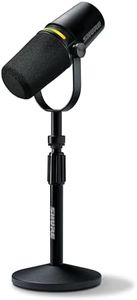
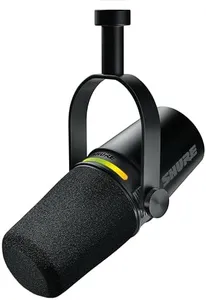
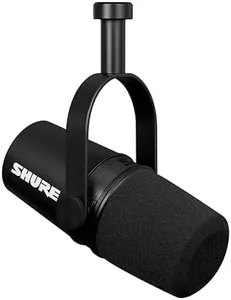
Shure MV7+ Dynamic Microphone – USB-C & XLR Podcast Mic for Streaming, Recording & Broadcasting, OBS Certified, Auto Level Mode, Digital Pop Filter, LED Panel, Black

Rating
10.0
Chosen by1,128
Microphone Type
Polar Pattern
Frequency Response

Most important from
945 reviews

Microphone Type
Perfect for podcasting, streaming, and voiceovers with outstanding sound quality.
Polar Pattern
The cardioid polar pattern effectively reduces background noise.
Frequency Response
The vocal clarity and general audio output are a significant upgrade over average laptop mics.
Connectivity
The dual USB/XLR output offers great flexibility for different recording environments.
Build Quality
The build quality feels incredibly sturdy and premium.
Additional Features
Built-in headphone jack with zero-latency monitoring is very helpful.

The Shure MV7+ Podcast Dynamic Microphone is a versatile choice for podcasters, gamers, and streamers, delivering excellent audio quality with its unidirectional polar pattern. Its OBS certification ensures seamless integration with streaming software, making it user-friendly for both beginners and experienced users. A standout feature is the multi-color LED touch panel, which not only adds a visual element but also functions as an audio level meter and has a quick mute option. This is particularly handy during live sessions when you need to cut off the mic quickly.

The microphone employs advanced voice isolation technology and a real-time denoiser to minimize background noise, making it suitable for less-than-ideal recording environments. Additionally, the onboard reverb effects can enhance audio depth, which is great for music and voice recordings alike.

Connectivity is flexible with both USB-C and XLR outputs, allowing you to integrate it into various setups. The Motiv Mix App further personalizes your experience, enabling customization of the LED settings and microphone parameters.

Rating
10.0
Chosen by1,128
Microphone Type
Polar Pattern
Frequency Response

Most important from
945 reviews

Microphone Type
Perfect for podcasting, streaming, and voiceovers with outstanding sound quality.
Polar Pattern
The cardioid polar pattern effectively reduces background noise.
Frequency Response
The vocal clarity and general audio output are a significant upgrade over average laptop mics.
Connectivity
The dual USB/XLR output offers great flexibility for different recording environments.
Build Quality
The build quality feels incredibly sturdy and premium.
Additional Features
Built-in headphone jack with zero-latency monitoring is very helpful.
#2

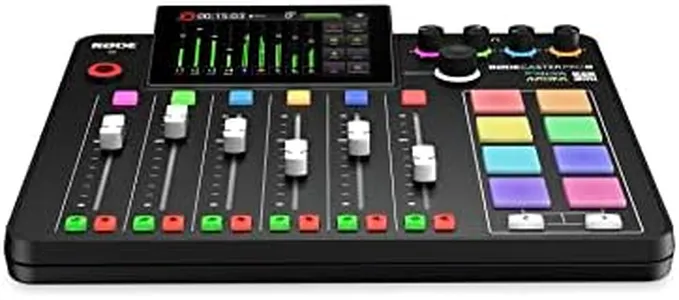
RØDE RØDECaster Pro II All-in-One Production Solution for Podcasting, Streaming, Music Production and Content Creation,Black

Rating
9.1
Connectivity
Build Quality
Additional Features

Most important from
1227 reviews

Connectivity
Bluetooth connectivity, onboard recording, and direct USB-C support make it super convenient to use with your computer or mobile devices.
Build Quality
The physical faders are studio quality, and the smart pads can be used to play sound clips, voice effects, and fade in/out, adding up to a very impressive home studio mixer.
Additional Features
The RØDECaster Pro II is a dream come true for content creators, podcasters, and streamers alike, packed with features that make creating high-quality audio content effortless and fun.

The RØDE RØDECaster Pro II is designed as an all-in-one solution for podcasters, streamers, and musicians, making it a compelling choice for those looking to enhance their audio production. One of its standout features is the ultra-low-noise Revolution Preamps, which deliver exceptional sound quality by minimizing background noise. The device also offers four high-quality Neutrik combo inputs, allowing users to connect various microphones and instruments seamlessly. With nine assignable channels and six physical faders, it provides significant control over your audio levels, which is beneficial for live streaming and multi-person podcasts.

In terms of connectivity, the RØDECaster Pro II supports both Wi-Fi and Ethernet connections, offering flexibility in how you set it up, whether at home or in a studio setting. It's compatible with major operating systems like macOS and Windows, which broadens its usability.

The device is relatively bulky, weighing 4.4 pounds and measuring over 12 inches in width, which might be less portable for some users. While the build quality is robust, it is made from plastic, which may not feel as premium as metal alternatives. Additionally, while the price point is competitive for its features, it could be a bit high for beginners or hobbyists. For anyone serious about podcasting or content creation, the RØDECaster Pro II offers advanced features that can enhance audio quality and production efficiency. However, casual users or those with limited space might want to consider smaller or more straightforward options.

Rating
9.1
Connectivity
Build Quality
Additional Features

Most important from
1227 reviews

Connectivity
Bluetooth connectivity, onboard recording, and direct USB-C support make it super convenient to use with your computer or mobile devices.
Build Quality
The physical faders are studio quality, and the smart pads can be used to play sound clips, voice effects, and fade in/out, adding up to a very impressive home studio mixer.
Additional Features
The RØDECaster Pro II is a dream come true for content creators, podcasters, and streamers alike, packed with features that make creating high-quality audio content effortless and fun.
#3

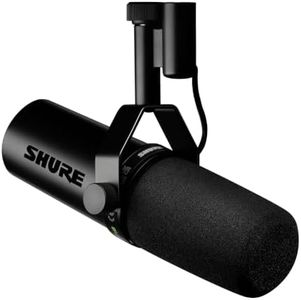
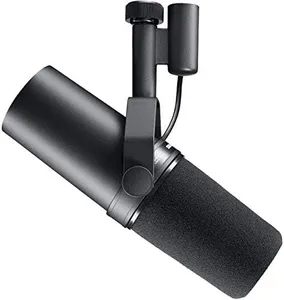
Shure SM7B Dynamic Studio Microphone - XLR Mic for Podcasting, Streaming, Vocal Recording & Broadcasting, Wide Frequency Range, Smooth Warm Audio, Detachable Windscreen, Black

Rating
8.5
Microphone Type
Frequency Response
Connectivity

Most important from
12113 reviews

Microphone Type
If you have a home studio that isn't properly treated acoustically, favor dynamic microphones like the SM7B.
Frequency Response
The low boost and tapered high end is flattering, unlike some condenser microphones that will rip your head off with the boost in high frequencies.
Connectivity
Ensure you have a sufficient power source for this microphone; a slightly overkill amplifier is strongly recommended to get the most out of this product.
Build Quality
The Shure SM7B is built to last, so although expensive, the value is certainly there.
Additional Features
Do you record in a noisy environment? No need for noise gates or fancy software; this microphone will perform as required out of the box.

The Shure SM7B is a top-tier dynamic microphone, highly regarded in the podcasting and broadcasting community. Its unidirectional polar pattern ensures that it captures sound directly in front while minimizing background noise, making it ideal for home studios and professional settings alike. With a smooth, flat frequency response, this mic provides a natural and rich sound quality, essential for clear vocal reproduction in recordings and live streaming.

One of the standout features is its effective air suspension shock isolation and built-in pop filter, which significantly reduce mechanical noise and plosives, ensuring that your voice comes through cleanly. It's also built ruggedly, designed to withstand the rigors of regular use, which is a plus for those on the go.

The SM7B requires an XLR connection and typically needs a good audio interface or preamp that provides sufficient gain (at least 60dB) to achieve its best sound. This might be a hurdle for beginners who are accustomed to USB microphones or simpler plug-and-play solutions. Additionally, while it performs excellently for vocals, some may find it less versatile for instruments or wide-ranging audio scenarios compared to other microphones in its category.

Rating
8.5
Microphone Type
Frequency Response
Connectivity

Most important from
12113 reviews

Microphone Type
If you have a home studio that isn't properly treated acoustically, favor dynamic microphones like the SM7B.
Frequency Response
The low boost and tapered high end is flattering, unlike some condenser microphones that will rip your head off with the boost in high frequencies.
Connectivity
Ensure you have a sufficient power source for this microphone; a slightly overkill amplifier is strongly recommended to get the most out of this product.
Build Quality
The Shure SM7B is built to last, so although expensive, the value is certainly there.
Additional Features
Do you record in a noisy environment? No need for noise gates or fancy software; this microphone will perform as required out of the box.

Buying Guide for the Best Podcasting Microphones

Choosing the right podcasting microphone is crucial for ensuring high-quality audio for your listeners. The right microphone can make your voice sound clear and professional, which is essential for keeping your audience engaged. When selecting a podcasting microphone, consider the following key specifications to find the best fit for your needs.
Microphone TypeMicrophone type refers to the technology used to capture sound. The two main types are dynamic and condenser microphones. Dynamic microphones are durable and handle high sound pressure levels well, making them ideal for loud environments or live settings. Condenser microphones are more sensitive and provide a wider frequency response, which is great for capturing detailed and nuanced audio in a controlled environment. If you record in a quiet, treated space, a condenser microphone might be the best choice. For less controlled environments or on-the-go recording, a dynamic microphone could be more suitable.
Polar PatternThe polar pattern of a microphone describes how it picks up sound from different directions. Common polar patterns include cardioid, omnidirectional, and bidirectional. Cardioid microphones pick up sound primarily from the front, which helps to isolate your voice from background noise. Omnidirectional microphones capture sound equally from all directions, which can be useful for recording group discussions. Bidirectional microphones pick up sound from the front and back, making them ideal for interviews. Choose a polar pattern based on your recording setup and the type of content you produce.
Frequency ResponseFrequency response refers to the range of frequencies a microphone can capture. A flat frequency response means the microphone captures all frequencies equally, which is ideal for a natural sound. Some microphones have tailored frequency responses that emphasize certain frequencies, such as the human voice. For podcasting, a microphone with a frequency response that enhances vocal clarity can be beneficial. Consider the type of content you produce and whether you need a microphone that captures a wide range of sounds or one that focuses on vocal clarity.
ConnectivityMicrophones can connect to recording devices in different ways, with USB and XLR being the most common. USB microphones are easy to use and connect directly to your computer, making them ideal for beginners or those who want a simple setup. XLR microphones require an audio interface or mixer, which can provide better sound quality and more control over your audio. If you are just starting out or need a portable solution, a USB microphone might be the best choice. For more advanced setups and higher audio quality, consider an XLR microphone.
Build QualityBuild quality refers to the materials and construction of the microphone. A well-built microphone will be more durable and reliable over time. Look for microphones with metal bodies and sturdy components, especially if you plan to travel or use the microphone frequently. Consider your recording environment and how often you will be moving the microphone. If you need a microphone that can withstand regular use and potential bumps, prioritize build quality.
Additional FeaturesSome microphones come with additional features such as built-in headphone jacks, gain controls, or mute buttons. These features can provide more control over your recording and improve your workflow. Built-in headphone jacks allow you to monitor your audio in real-time, while gain controls let you adjust the microphone's sensitivity. Mute buttons can be useful for quickly silencing the microphone. Think about your recording process and whether these features would enhance your experience.

FAQ