We Use CookiesWe use cookies to enhance the security, performance, functionality and for analytical and promotional activities. By continuing to browse this site you are agreeing to our privacy policy

10 Best Inline Fans 2026 in the United States
How do we rank products for you?

Our technology thoroughly searches through the online shopping world, reviewing hundreds of sites. We then process and analyze this information, updating in real-time to bring you the latest top-rated products. This way, you always get the best and most current options available.

headphones-stars

Our Top Picks

#1

Winner

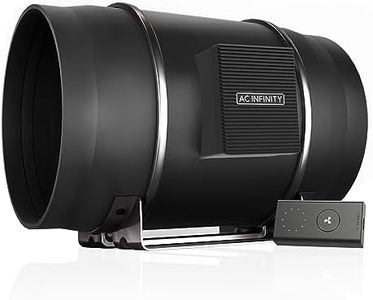
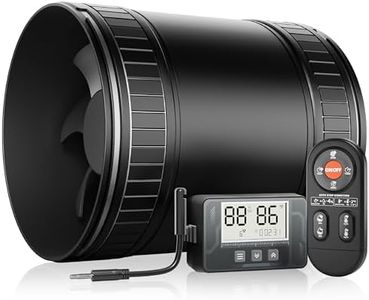
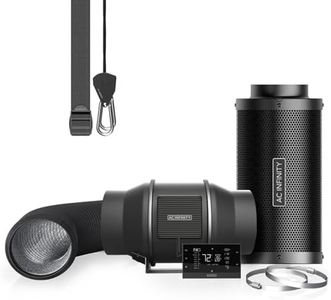
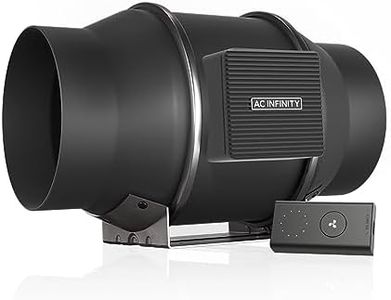
AC Infinity CLOUDLINE PRO S12, Quiet 12” Inline Duct Fan with Speed Controller - EC Motor Ventilation Exhaust Fan for Heating Cooling Booster, Grow Tents, Hydroponics

The AC Infinity CLOUDLINE PRO S12 is a strong choice if you need a powerful and versatile inline fan for ventilation purposes like grow rooms, cooling AV closets, or hydroponics. It delivers a high airflow of 1604 CFM through a 12-inch duct, which is excellent for moving a lot of air efficiently. The fan uses an EC motor known for being energy efficient and quiet, producing noise around 62 dB—noticeable but not overly loud for most indoor settings. The build quality is solid, with metal construction and dual ball bearings that support durability and smooth operation over time.

Speed control is a standout feature here, offering a wired 10-speed controller and compatibility with smart controllers for customized programming, giving you flexible airflow adjustments. The mixed flow design helps maintain good performance even in areas with higher resistance, which means it can handle typical duct setups well.

On the downside, while 62 dB noise is moderate, it might be a bit loud for very noise-sensitive environments. Also, the fan is fairly large and requires a 12-inch duct, so it’s best suited for setups that can accommodate this size. Some users might find the 250-watt power draw higher than smaller models, but this matches its strong airflow performance. If you want a reliable, programmable, and efficient inline fan mainly for indoor ventilation tasks requiring strong airflow and decent noise control, the CLOUDLINE PRO S12 is a solid pick.

#2

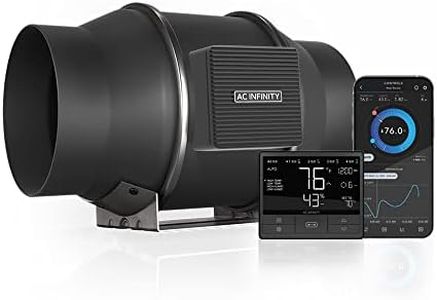
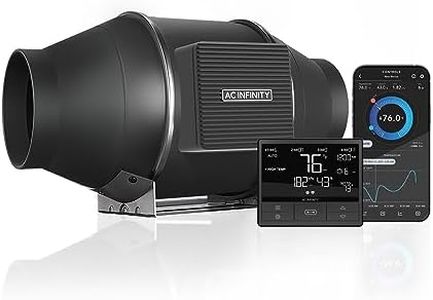
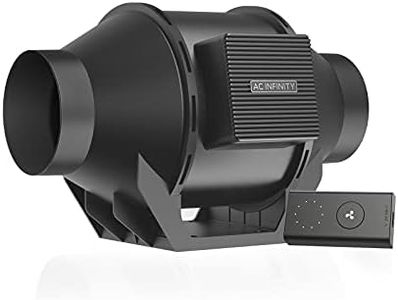
AC Infinity CLOUDLINE PRO T6, Quiet 6” Inline Duct Fan with Temperature Humidity VPD Controller, WiFi Integrated App Control - Ventilation Exhaust Fan for Heating Cooling, Grow Tents, Hydroponics

Rating
8.2
Airflow (CFM)
Build Quality and Durability
Noise Level (dB)

Most important from
10103 reviews

Airflow (CFM)
This fan delivers powerful airflow that effectively regulates temperature and humidity, significantly improving indoor plant health and growth.
Build Quality and Durability
The build quality is exceptional, with durable materials and a design that promises long-lasting performance.
Noise Level (dB)
It operates surprisingly quietly, even at higher speeds, making it ideal for noise-sensitive environments.
Energy Efficiency
Energy consumption is impressively low, running at about 30 to 40 watts, which translates into substantial electricity savings compared to traditional fans.
Speed Control
The included speed controller and temperature sensor offer flexible, precise control over airflow, allowing customization based on specific environmental needs.
Duct Size Compatibility
Installation is straightforward with standard 6-inch duct compatibility, though the mixed flow design performs best with minimal duct bends.

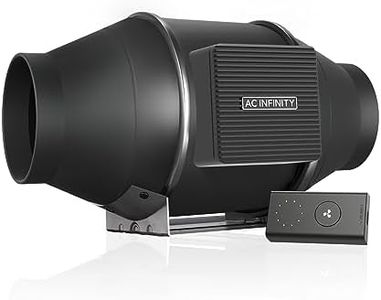
The AC Infinity CLOUDLINE PRO T6 is a 6-inch inline fan designed mainly for grow rooms, hydroponics, and ventilation needs like cooling AV closets or exhausting odors. It delivers a solid airflow of 402 CFM, which means it can move a good amount of air to keep your space fresh and temperature controlled. One of its standout features is how quiet it runs, producing only about 32 decibels, so it won't be a noisy distraction.

This fan is built with a mixed flow design and uses an energy-efficient EC motor, helping you save on electricity without losing performance. It supports smart controls through a WiFi app, allowing you to set temperature and humidity limits, create schedules, and monitor conditions remotely, which adds convenience especially if you want precise climate control. The app also offers multiple speed settings (up to 10), so you can adjust airflow based on your needs.

In terms of build quality, it uses durable plastic with dual ball bearings, which helps it last longer and run smoothly. The 6-inch duct size fits standard ventilation setups, making installation relatively straightforward for most indoor spaces. Although the fan is water-resistant, it is intended for indoor use only, so it might not suit outdoor environments.

Rating
8.2
Airflow (CFM)
Build Quality and Durability
Noise Level (dB)

Most important from
10103 reviews

Airflow (CFM)
This fan delivers powerful airflow that effectively regulates temperature and humidity, significantly improving indoor plant health and growth.
Build Quality and Durability
The build quality is exceptional, with durable materials and a design that promises long-lasting performance.
Noise Level (dB)
It operates surprisingly quietly, even at higher speeds, making it ideal for noise-sensitive environments.
Energy Efficiency
Energy consumption is impressively low, running at about 30 to 40 watts, which translates into substantial electricity savings compared to traditional fans.
Speed Control
The included speed controller and temperature sensor offer flexible, precise control over airflow, allowing customization based on specific environmental needs.
Duct Size Compatibility
Installation is straightforward with standard 6-inch duct compatibility, though the mixed flow design performs best with minimal duct bends.
#3

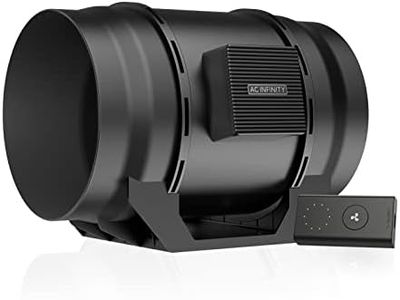
AC Infinity CLOUDLINE A8, Quiet 8" Inline Duct Fan with Speed Controller, EC Motor - Ventilation Exhaust Fan for Heating Cooling Booster, Grow Tents, Hydroponics

The AC Infinity CLOUDLINE A8 is a strong choice for anyone needing a quiet and efficient inline duct fan, especially for grow tents, hydroponics, or small room ventilation. It offers solid airflow performance at 724 CFM, which means it can move a good amount of air to keep your space fresh and well-ventilated. Noise level is quite low at 42 dB, so it won’t be disruptive in most indoor settings. The fan fits standard 8-inch ducts, making it compatible with common ventilation setups. This model uses an EC motor, known for energy efficiency and durability, which also helps keep running costs reasonable. Build quality is reliable, with dual ball bearings that extend fan life and reduce maintenance.

A highlight is the included wired 10-speed controller, offering flexible airflow adjustment to suit different needs — from gentle ventilation to more powerful air movement. However, while it has a speed control, it isn't smart home compatible, so you won't get automated adjustments or remote control via apps unless you add compatible controllers separately. It’s designed mainly for indoor use and comes with mounting hardware for easy installation.

If you want a quiet, durable fan that’s easy to control manually and energy efficient, the CLOUDLINE A8 fits well. For those seeking integration with smart home systems right out of the box, this model might fall short. It is a well-built, versatile fan that meets the core needs of hydroponic and general ventilation without extra smart features.

Buying Guide for the Best Inline Fans

Choosing the right inline fan can significantly improve the ventilation and air quality in your space. Inline fans are used in various applications, including HVAC systems, grow rooms, and bathrooms. To make an informed decision, you need to understand the key specifications and how they relate to your specific needs. Here are the main factors to consider when selecting an inline fan.
Airflow (CFM)Airflow, measured in cubic feet per minute (CFM), indicates how much air the fan can move. This is crucial because it determines the fan's ability to ventilate a space effectively. For small spaces like bathrooms, a lower CFM (50-100) might be sufficient. Medium-sized rooms or grow tents may require a moderate CFM (100-300). Larger areas or commercial applications will need a higher CFM (300+). To pick the right CFM, consider the size of the space and the level of ventilation required.
Noise Level (dB)Noise level, measured in decibels (dB), indicates how loud the fan will be during operation. This is important if the fan will be used in living spaces or areas where noise could be disruptive. Fans with noise levels below 30 dB are considered very quiet and suitable for bedrooms or offices. Noise levels between 30-50 dB are moderate and acceptable for most household applications. Fans above 50 dB might be too loud for some environments but could be acceptable in industrial settings. Choose a noise level that matches the tolerance of the space where the fan will be installed.
Duct Size CompatibilityDuct size compatibility refers to the diameter of the ducts the fan can connect to. This is important because it ensures the fan will fit into your existing ventilation system. Common duct sizes are 4, 6, 8, and 10 inches. Smaller ducts (4-6 inches) are typically used in residential settings, while larger ducts (8-10 inches) are more common in commercial or industrial applications. Select a fan that matches the duct size of your current setup or the size you plan to install.
Energy EfficiencyEnergy efficiency indicates how much power the fan consumes relative to the airflow it provides. This is important for reducing energy costs and minimizing environmental impact. Fans with higher energy efficiency ratings will use less electricity to move the same amount of air compared to less efficient models. Look for fans with energy-efficient motors or those labeled with energy-saving certifications. Choose an energy-efficient fan if you are concerned about long-term operating costs and environmental sustainability.
Build Quality and DurabilityBuild quality and durability refer to the materials and construction of the fan. This is important for ensuring the fan's longevity and reliability. Fans made from high-quality materials like metal or reinforced plastic are more durable and can withstand harsh conditions. Consider the environment where the fan will be used; for example, a fan in a humid area should be resistant to rust and corrosion. Choose a fan with a solid build if you need a long-lasting and dependable solution.
Speed ControlSpeed control allows you to adjust the fan's airflow to match your ventilation needs. This is important for providing flexibility and optimizing performance. Some fans come with built-in speed controllers, while others may require an external controller. Variable speed control is useful in applications where airflow needs can change, such as grow rooms or multi-use spaces. Choose a fan with speed control if you need the ability to fine-tune the ventilation.

FAQ