We Use CookiesWe use cookies to enhance the security, performance, functionality and for analytical and promotional activities. By continuing to browse this site you are agreeing to our privacy policy

10 Best Emf Meters 2026 in the United States
How do we rank products for you?

Our technology thoroughly searches through the online shopping world, reviewing hundreds of sites. We then process and analyze this information, updating in real-time to bring you the latest top-rated products. This way, you always get the best and most current options available.

headphones-stars

Our Top Picks

#1

Winner

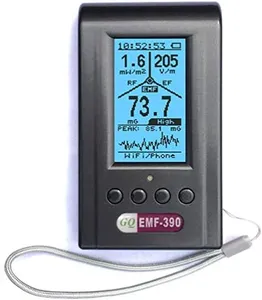
EMF Meter,Advanced GQ EMF-390 Multi-Field Electromagnetic Radiation 3-in-1 EMF ELF RF meter, 5G Cell Tower Smart meter Wifi Signal Detector RF up to 10GHz with Data Logger and 2.5Ghz Spectrum Analyzer

Rating
10.0
Chosen by1,420
Frequency Range
Sensitivity
Type of EMF Detected

Most important from
3285 reviews

Frequency Range
One particularly useful feature is the ability to document frequencies and their dBms, making it easier to locate origin signals.
Sensitivity
The device allows for precise measurement of EMFs, including dirty electricity and radio frequencies from various smart devices.
Type of EMF Detected
The device allows for precise measurement of EMFs, including dirty electricity and radio frequencies from various smart devices.
Display and Readout
An incredibly versatile and useful tool at an outstanding value, offering several screens to view EMF, EM, and RF readings.
Data Logging and Connectivity
One particularly useful feature is the ability to document frequencies and their dBms, making it easier to locate origin signals.
Calibration and Accuracy
Experts find this unit impressive, even when compared to expensive spectrum analyzers.
Portability and Durability
The long battery life and ease of use make it a great device for monitoring RF and EF exposure.

The GQ EMF-390 Multi-Field Electromagnetic Radiation Meter is a solid choice for anyone interested in measuring electromagnetic fields, especially with its capability to detect frequencies up to 10GHz, including 5G signals. Users looking for a reliable way to monitor sources like power lines, smart meters, and microwaves will appreciate the multiple high-sensitivity sensors it offers. The built-in RF spectrum analyzer and real-time monitoring features add to its utility, making it a valuable tool for individuals concerned about radiation exposure in their environment.

One of the standout strengths of this device is its user-friendly display, which provides safety suggestions and clear readouts, helping users quickly understand the current EMF situation. Its portability is also a plus, weighing just 10 ounces and operating on battery power, making it easy to carry around.

There are some drawbacks to consider. While the meter is designed for tabletop use, this limits its versatility in different settings. The need for a specific battery type (LR44) could be a minor inconvenience, especially since it doesn’t come with batteries included. Additionally, although it ranks well in its category, potential buyers should be aware that the features may not be as comprehensive as those found in more expensive models available on the market.

Rating
10.0
Chosen by1,420
Frequency Range
Sensitivity
Type of EMF Detected

Most important from
3285 reviews

Frequency Range
One particularly useful feature is the ability to document frequencies and their dBms, making it easier to locate origin signals.
Sensitivity
The device allows for precise measurement of EMFs, including dirty electricity and radio frequencies from various smart devices.
Type of EMF Detected
The device allows for precise measurement of EMFs, including dirty electricity and radio frequencies from various smart devices.
Display and Readout
An incredibly versatile and useful tool at an outstanding value, offering several screens to view EMF, EM, and RF readings.
Data Logging and Connectivity
One particularly useful feature is the ability to document frequencies and their dBms, making it easier to locate origin signals.
Calibration and Accuracy
Experts find this unit impressive, even when compared to expensive spectrum analyzers.
Portability and Durability
The long battery life and ease of use make it a great device for monitoring RF and EF exposure.
#2

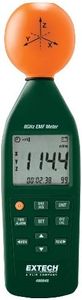
Extech 480846 Electromagnetic 8GHz RF Field Strength Meter

Rating
9.4
Frequency Range
Calibration and Accuracy
Display and Readout

Most important from
9 reviews

Frequency Range
The device is straightforward and simple to operate, covering a wide frequency range at a lower cost than many alternatives.
Calibration and Accuracy
The meter effectively measures RF power density from common sources like cell towers and microwave ovens within a reasonable accuracy range.
Display and Readout
Lack of a persistent audio off option means users must disable sound repeatedly each time the meter is powered on.
Portability and Durability
The meter offers individual axis measurements but lacks clear guidance on correlating axes to the actual direction of EMF sources, complicating directional detection.

The Extech 480846 RF Field Strength Meter is designed to detect electromagnetic fields in a wide frequency range from 10 MHz up to 8 GHz, making it suitable for measuring high-frequency sources like mobile phone antennas and Wi-Fi signals. Its ±2.0 dB accuracy is decent for general monitoring, allowing you to get a reliable sense of radio frequency (RF) power levels. The meter’s focus on RF measurement means it’s best for users needing to check wireless device emissions rather than a broad range of EMF types.

The product is portable and lightweight, which is convenient for spot checks or on-site measurements, and it comes with a protective case and included batteries. However, the meter lacks advanced features like data logging, connectivity for transferring readings, or a detailed digital display, which might limit its use for those who want to track or analyze data over time. Its analog or simple readout also means it’s more suited for quick assessments rather than precise scientific analysis.

This meter serves as a solid choice if you need a straightforward tool for detecting RF fields in the specified frequency range without extra bells and whistles, especially for casual or entry-level use.

Rating
9.4
Frequency Range
Calibration and Accuracy
Display and Readout

Most important from
9 reviews

Frequency Range
The device is straightforward and simple to operate, covering a wide frequency range at a lower cost than many alternatives.
Calibration and Accuracy
The meter effectively measures RF power density from common sources like cell towers and microwave ovens within a reasonable accuracy range.
Display and Readout
Lack of a persistent audio off option means users must disable sound repeatedly each time the meter is powered on.
Portability and Durability
The meter offers individual axis measurements but lacks clear guidance on correlating axes to the actual direction of EMF sources, complicating directional detection.
#3

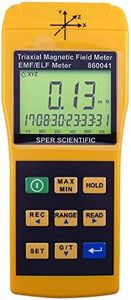
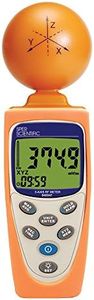
Sper Scientific 3 Axis EMF Meter 860041 - Accurate Electromagnetic Field Measurement, Auto/Manual Logging, mG & µT Scales, LCD Display, Up to 500 Readings for ELF Exposure Monitoring - 4 pc

The Sper Scientific 3 Axis EMF Meter 860041 is designed to accurately measure electromagnetic fields, especially useful for monitoring everyday sources like power lines and household appliances. Its triple-axis sensor ensures precise readings from different directions, improving reliability. The meter covers a frequency range from 30 Hz to 2000 Hz, which suits most common low-frequency EMF sources. Measurements can be viewed in both milli-Gauss and micro-Tesla units, with adjustable sensitivity to detect weaker or stronger fields. A key feature is its ability to log up to 500 readings automatically or manually, each stamped with time and date, helping users track changes in EMF exposure over time.

The large, easy-to-read LCD displays live data, including minimum and maximum values, battery status, and warnings if the signal is too strong. Portability is enhanced by its compact size and included carrying case, and it runs on a 9V battery that can last about 100 hours. Tripod screws are included to stabilize the device during measurements. While it performs well for monitoring low-frequency electromagnetic fields and offers solid accuracy for its price, it does not cover very high frequencies or specialized EMF types beyond those common in home and office environments.

This makes the Sper Scientific 860041 best suited for general EMF checks rather than advanced scientific research. It is a practical, user-friendly tool for anyone seeking a reliable way to measure and log EMF exposure without complicated setup or interpretation.

Buying Guide for the Best Emf Meters

When choosing an EMF (Electromagnetic Field) meter, it's important to understand the key specifications and features that will help you find the best fit for your needs. EMF meters are used to measure electromagnetic fields, which can be emitted by various electronic devices and power lines. Knowing what to look for in an EMF meter will ensure you get accurate readings and the functionality you need for your specific application, whether it's for personal safety, professional use, or scientific research.
Frequency RangeThe frequency range of an EMF meter indicates the range of electromagnetic frequencies it can detect. This is important because different sources of EMF emit at different frequencies. For example, power lines typically emit at 50-60 Hz, while wireless devices like Wi-Fi and cell phones operate at much higher frequencies. If you need to measure EMF from a variety of sources, look for a meter with a wide frequency range. For general home use, a range that covers 50 Hz to 3 GHz is usually sufficient. For more specialized applications, such as industrial or scientific use, you may need a meter with an even broader range.
SensitivitySensitivity refers to the meter's ability to detect low levels of electromagnetic fields. This is crucial if you need to measure weak EMF signals or if you are concerned about low-level exposure. Sensitivity is often measured in microteslas (µT) or milligauss (mG). For general use, a sensitivity of 0.1 µT or 1 mG is typically adequate. If you need to detect very low levels of EMF, look for a meter with higher sensitivity, such as 0.01 µT or 0.1 mG.
Type of EMF DetectedEMF meters can detect different types of electromagnetic fields, including electric fields, magnetic fields, and radiofrequency (RF) fields. It's important to choose a meter that can detect the type of EMF you are concerned about. For example, if you are worried about exposure from power lines, you will need a meter that can detect magnetic fields. If you are concerned about wireless devices, you will need a meter that can detect RF fields. Some meters can detect multiple types of EMF, which can be useful for comprehensive assessments.
Display and ReadoutThe display and readout of an EMF meter show the measured values and other relevant information. A clear, easy-to-read display is important for accurately interpreting the readings. Look for a meter with a digital display that shows the EMF levels in units you are comfortable with, such as microteslas or milligauss. Some meters also offer additional features like backlighting for use in low-light conditions, or graphical displays that show trends over time. Consider your specific needs and how you will be using the meter when evaluating the display options.
Data Logging and ConnectivityData logging and connectivity features allow you to record and transfer EMF measurements for further analysis. This can be particularly useful for professional or scientific applications where you need to track EMF levels over time or across different locations. Some meters come with built-in memory for storing readings, while others offer connectivity options like USB or Bluetooth for transferring data to a computer or mobile device. If you need to keep detailed records of your measurements, look for a meter with robust data logging and connectivity features.
Calibration and AccuracyCalibration and accuracy are critical for ensuring that your EMF meter provides reliable measurements. Calibration refers to the process of adjusting the meter to ensure its readings are accurate. Some meters come pre-calibrated from the factory, while others may require periodic calibration. Accuracy is typically expressed as a percentage, indicating how close the meter's readings are to the true EMF levels. For most applications, an accuracy of ±5% is sufficient. If you need highly precise measurements, look for a meter with higher accuracy and consider whether it can be easily recalibrated.
Portability and DurabilityPortability and durability are important considerations, especially if you need to use the EMF meter in different locations or in challenging environments. A portable meter should be lightweight and easy to carry, with a design that allows for one-handed operation. Durability is also important, particularly if you will be using the meter outdoors or in industrial settings. Look for a meter with a rugged design, possibly with water and dust resistance, to ensure it can withstand the conditions in which you will be using it.

FAQ