10 Best Cheap Dslr Cameras 2026 in the United States
Related Products


Recommended lists


Our technology thoroughly searches through the online shopping world, reviewing hundreds of sites. We then process and analyze this information, updating in real-time to bring you the latest top-rated products. This way, you always get the best and most current options available.

Our Top Picks
Winner
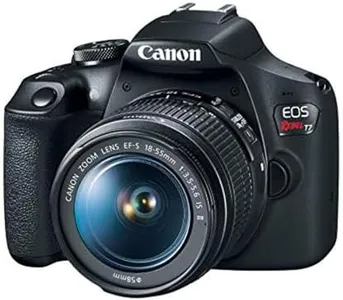
Canon EOS Rebel T7 DSLR Camera with 18-55mm Lens | Built-in Wi-Fi | 24.1 MP CMOS Sensor | DIGIC 4+ Image Processor and Full HD Videos
Most important from
8371 reviews
The Canon EOS Rebel T7 is a solid entry-level DSLR camera that appeals especially to photography beginners and hobbyists. With a 24.1 Megapixel CMOS sensor and an ISO range of 100 to 6400 (expandable to 12800), it delivers decent image quality in a variety of lighting conditions. The inclusion of built-in Wi-Fi is great for easy sharing of photos, and the camera is compatible with Canon EF and EF-S lenses, providing flexibility for future upgrades.
The 9-point autofocus system is adequate for most situations, although it may feel limited compared to higher-end models with more points and advanced tracking capabilities. Continuous shooting at 3 frames per second is a bit on the slower side, which might not satisfy those interested in fast-action photography. For video, it supports Full HD recording, but lacks advanced features like 4K, which is common in more current cameras.
Build quality is typical for a budget DSLR; it feels sturdy but not overly robust. The optical viewfinder offers about 95% coverage, which is decent, but you might miss the final details in framing your shots. Ergonomically, the camera is user-friendly, making it easy to navigate through settings, even for newcomers. A drawback is its lack of weather sealing, which limits outdoor use in less-than-ideal conditions. Battery life is respectable, estimated at around 500 shots, but as with any camera, using Wi-Fi and video features can drain the battery faster.
Most important from
8371 reviews
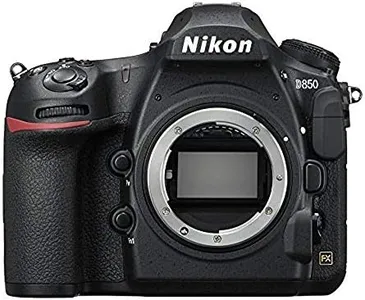
Nikon D850 FX-Format Digital SLR Camera Body
Most important from
772 reviews
The Nikon D850 is a full-frame DSLR with a large 45.7-megapixel sensor, offering exceptionally detailed photos and excellent dynamic range. Its ISO range extends up to 102,400, allowing good performance in low light. The autofocus system is advanced, featuring 153 focus points with phase detection that help capture sharp images quickly. It can shoot continuously at 9 frames per second, which is fast for a DSLR and useful for action photography. Video capabilities are strong, including 4K Ultra HD recording and slow motion up to 120 frames per second at 1080p, making it versatile for videography.
The build quality is robust and weather-sealed, plus a tilting touchscreen adds convenience for composing shots from different angles. Lens compatibility is excellent, supporting a wide range of Nikon FX and DX mount lenses. However, the D850 is a professional-grade camera and comes with a higher price tag, which might exceed the budget of those seeking a cheap DSLR. Its high resolution also means larger file sizes that require more storage and processing power.
Not the lightest model, its ergonomic design helps with handling during extended use. The Nikon D850 delivers outstanding image quality and features that surpass basic needs, making it ideal for serious enthusiasts or professionals rather than casual or beginner users searching for an inexpensive option.
Most important from
772 reviews
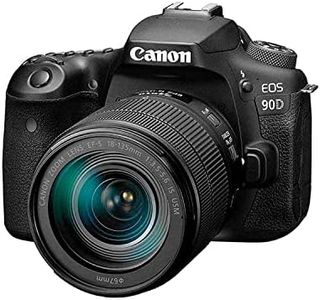
Canon DSLR Camera [EOS 90D] with 18-135 is USM Lens | Built-in Wi-Fi, Bluetooth, DIGIC 8 Image Processor, 4K Video, Dual Pixel CMOS AF, and 3.0 Inch Vari-Angle Touch LCD Screen, Black
Most important from
500 reviews
The Canon EOS 90D is a solid choice for those seeking a budget-friendly DSLR camera with impressive specifications. It features a 32.5 Megapixel APS-C sensor, providing high image quality and detailed photos. The DIGIC 8 Image Processor ensures fast performance, and the camera supports continuous shooting at up to 10 frames per second, which is great for capturing fast-moving subjects. The 45-point all cross-type autofocus system offers reliable and precise focusing, suitable for various shooting conditions.
Additionally, the camera can record 4K UHD video at 30p and Full HD video at up to 120p, making it versatile for both photography and videography needs. The built-in Wi-Fi and Bluetooth allow for easy sharing and remote control of the camera, adding to its convenience. The 3.0-inch vari-angle touch LCD screen provides flexibility for shooting from different angles and improves the user experience.
On the downside, the EOS 90D lacks in-body image stabilization, which means users might need to rely on lenses with stabilization for handheld shooting. Although the camera supports a wide ISO range up to 51,200, the performance in extremely low-light conditions may still have some noise. Furthermore, the camera’s body is relatively lightweight but not weather-sealed, which might be a consideration for outdoor photographers. The included 18-135mm USM lens offers a decent range for general photography, but more advanced users might want to invest in additional lenses for specific purposes. The Canon EOS 90D offers a strong mix of features and performance for its price, making it a suitable option for enthusiasts and semi-professional photographers looking for an affordable DSLR.